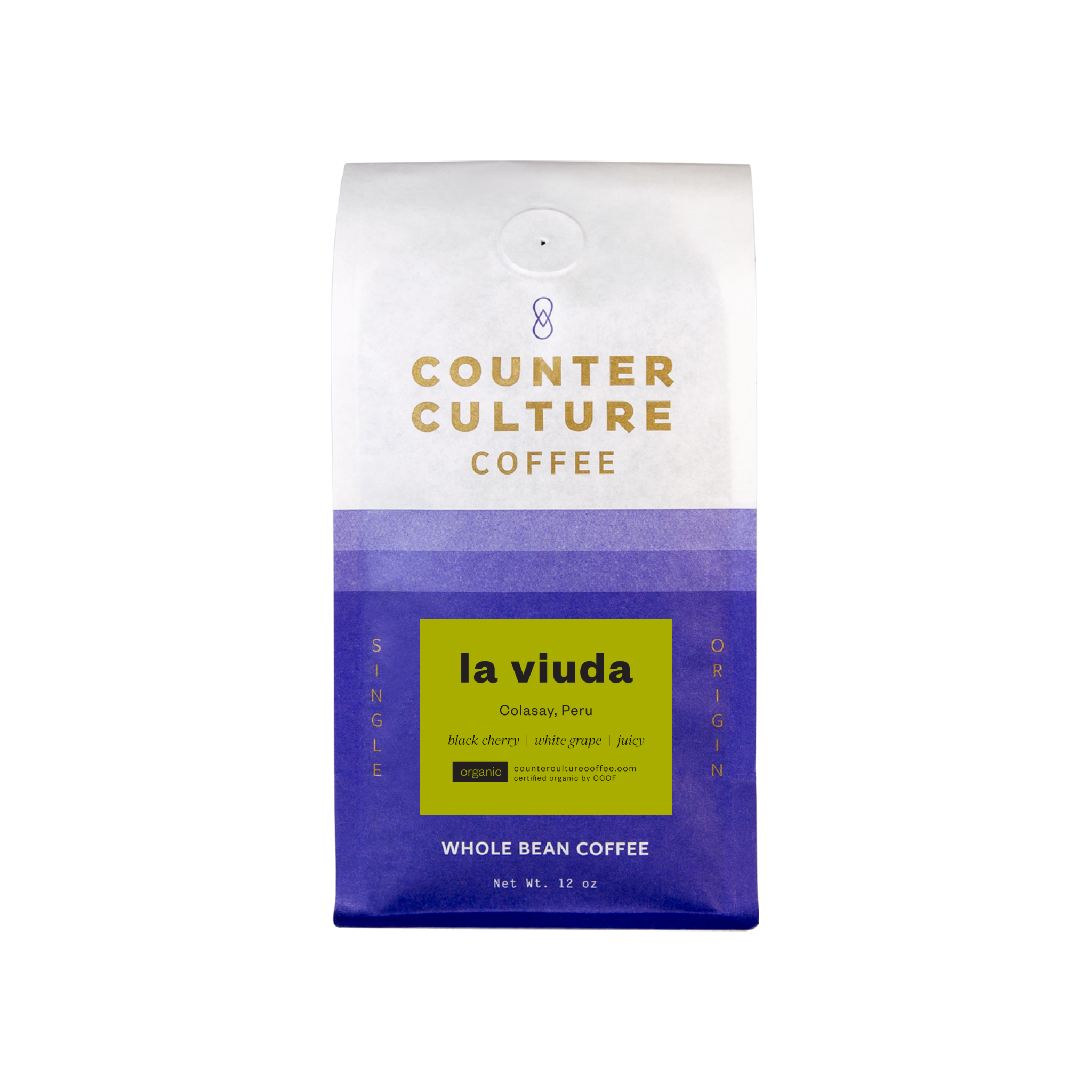
The city of Jaén, the capital of the larger province that shares the same name, is the hub of northern Peru’s bustling coffee trade. Historically, the highest-regarded areas for coffee have been north of the city. In 2017, our exporting partner, Origin Coffee Lab (OCL), sampled coffees from remote, lesser-known, districts west and southwest of the province. The flavor profiles were high-quality and unique, and OCL opened a cupping lab in the region to purchase coffees from farms located in Colasay, San Felipe, and Chontalí. We first visited and purchased coffees from Colasay during the 2019 harvest.
When searching for a name for this new product, we sought input from both OCL and their producer partners. "La Viuda" was the resounding answer. La Viuda, Spanish for “the Widow,” is a large mountain in the center of the communities. This towering peak is a geographical focal point, visible from many of the small communities in the area. It’s an ideal moniker: just as the communities share La Viuda’s peak as a visual landmark, these producers seek to have their coffees recognized from afar as among the best in Peru. This year’s selections for La Viuda come primarily from the community of La Higuera and Vencedor in the Colasay district.
The uniqueness of these coffees is primarily due to a regional coffee variety that producers refer to as “Bourbon de Colasay.” In the field, these trees bear an uncanny resemblance to traditional Bourbons; however, they produce more fruit and are highly resistant to Coffee Leaf Rust—a blight affecting nearly all coffee-growing regions worldwide. Genetic testing has revealed that this variety more closely resembles the genetics of Catimor, though it is not an exact match for any known Catimor variety. It may be the result of a cross-pollination or a mutation that happened in this area years ago. While Bourbon de Colasay has the production benefits of Catimors, it lacks the vegetal and astringent flavors often found in the Catimor family. This variety could become an important tool for producers battling the effects of climate change, which disproportionately affect traditional, high-quality varieties like Bourbon, Caturra, and Typica.